


IT OFTEN STARTS AS SOMETHING YOU PUSH THROUGH
Most people don’t come in saying “I have hip pain.”
They come in saying their groin feels tight after games. Or that one side feels different when they run. Or that something has been nagging for a few weeks that just hasn’t gone away.
Hip pain in active individuals is one of the most underreported and mismanaged issues we see — because it rarely starts as sharp, stop-you-in-your-tracks pain. It starts as something easy to ignore.
And July is a peak time for it. Summer sport seasons are ramping up, training loads are increasing, and the body hasn’t always had enough time to adapt.
WHAT HIP PAIN ACTUALLY FEELS LIKE
Because the hip is a large, multi-directional joint, pain can show up in different ways depending on what’s involved:- Deep groin ache during or after activity
- Tightness or pinching at the front of the hip when lifting the knee
- Pain on the outside of the hip after long runs or side-to-side movement
- Lower back discomfort that seems connected to one hip
- Stiffness first thing in the morning that loosens up with movement
None of these feel “serious” at first. That’s often the problem.
COMMON CAUSES WE SEE IN ACTIVE INDIVIDUALS
Hip pain in active people doesn’t usually have a single cause. It tends to involve a combination of factors:Hip flexor strain or overuse: The muscles at the front of the hip work hard during running, cycling, and kicking. When load increases too quickly, they can become strained or chronically tight.
Gluteal tendinopathy: The tendons of the glute muscles — particularly on the outer hip — are sensitive to compression and load. This often develops gradually and is frequently mistaken for IT band issues or referred back pain.
FAI (Femoroacetabular Impingement): A structural issue where the ball and socket of the hip joint make contact in a way that causes irritation. It’s particularly common in athletes who do a lot of hip flexion and rotation — and it often goes undiagnosed for months.
Hip labral irritation: The cartilage ring inside the hip joint can become irritated from repetitive movement or impact. Pain is often described as a deep ache or clicking sensation inside the joint.
Muscle imbalances: Weakness in the glutes, core, or hip stabilizers forces other structures to compensate — and those structures eventually start to complain.
WHY IT GETS WORSE IF YOU IGNORE IT
The hip is a load-bearing joint. Every step, every stride, every lateral movement runs through it.When the structures around the hip are irritated, the body adapts — unconsciously changing how you run, how you plant your foot, how you transfer weight. These compensations protect the hip short-term but tend to create new problems over time: in the knee, the lower back, or the opposite side.
This is why hip pain that starts as minor discomfort can become a pattern of recurring issues if it’s never properly assessed.
HOW PHYSIOTHERAPY ADDRESSES HIP PAIN
There is no one-size-fits-all approach. At OPTSC, a physiotherapy assessment for hip pain typically involves:- Identifying the specific structure involved
- Understanding how load and movement patterns are contributing
- Assessing hip strength, mobility, and control
- Looking at how the whole chain — from foot to spine — may be playing a role
Treatment often combines hands-on therapy to reduce pain and restore movement, alongside targeted exercises to rebuild strength and improve mechanics. The goal is not just to get rid of the pain — it’s to address the reason it developed so it doesn’t keep coming back.
WHEN TO SEEK SUPPORT
You don’t need to be limping to get help.Consider booking an assessment if:
- Tightness or discomfort in the hip or groin has lasted more than two weeks
- You notice changes in how you move or run on one side
- The same issue keeps returning after short periods of rest
- Pain is affecting your performance or enjoyment of activity
Early assessment almost always leads to a faster, simpler recovery.
WHAT THIS MEANS FOR SOCCER PLAYERS
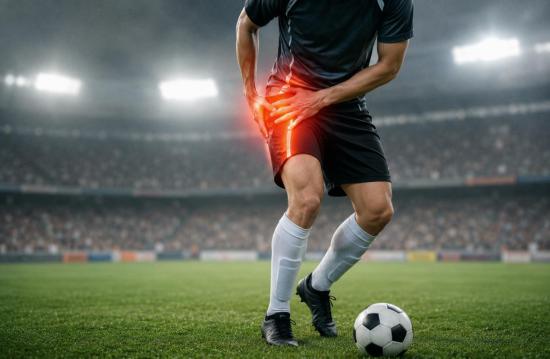
The hip is one of the most stressed joints in soccer.Sprinting, cutting, kicking, and change-of-direction movements all place repeated load on the hip flexors, adductors, and glute complex. As summer leagues and outdoor seasons begin, many players are returning to higher volumes of training after a quieter period — and the hip is often the first place overload shows up.
That groin tightness after a match or the pinching feeling when you drive through a tackle isn’t something to train through indefinitely. Getting it assessed early can be the difference between a two-week fix and a two-month setback.
STAY ACTIVE. MOVE WELL.
Hip pain is common — but it’s also very treatable when caught early.At OPTSC, our physiotherapists work with active individuals at every level to identify what’s driving hip discomfort and get them back to full movement with confidence. Whether you’re playing competitive soccer, running recreationally, or just noticing something that doesn’t feel right, we’re here to help.


